



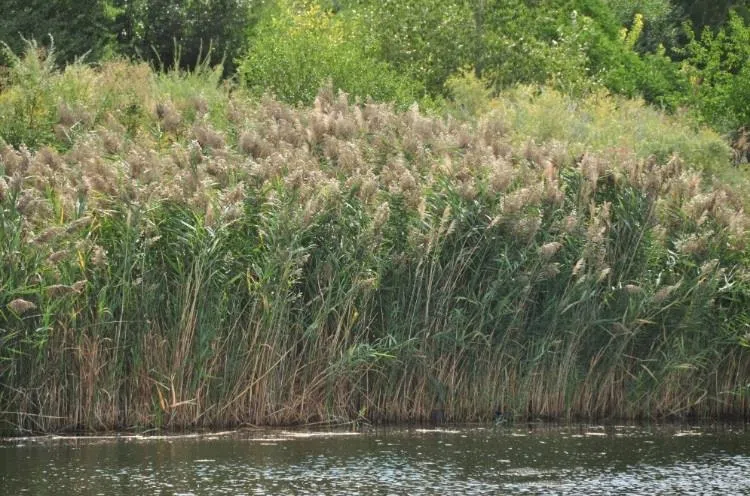
An invasive reed is spreading fast across Ontario, and experts say it has the capacity to overwhelm ecosystems if left uncontrolled.
Phragmites, a non-native plant imported from Europe, is one of Canada’s most virulent invasive plant species. They form dense thickets that can displace native vegetation, destroy wetlands, and lead to a higher risk of fire and flooding.
Sam Tank with the Great Lakes Phragmites Collaborative said the plant is now showing up in more areas, including around Georgian Bay and other cottage communities.
“We’re seeing it pop up more and more, especially in areas where the landscape has been disturbed,” said Tank.
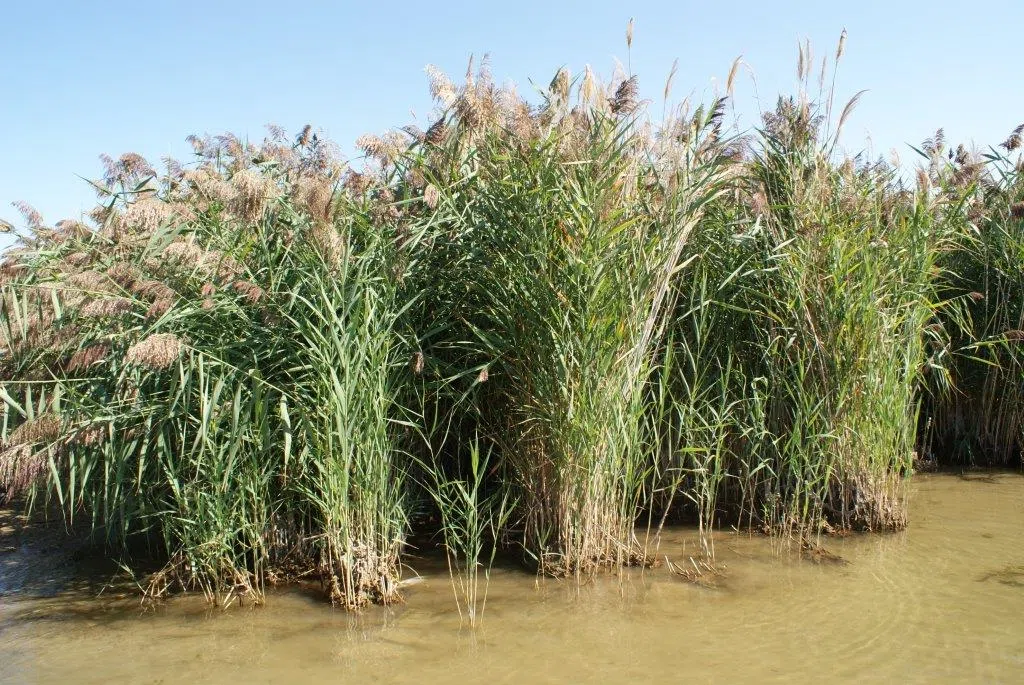
Photo Taken: (Ontario Invasive Plant Council)
The reed has been in North America for more than a century, but its expansion has increased in recent years because of development, changed water levels, and global warming. After it becomes rooted, Tank added, it is very hard to eradicate.
“If it can’t be eradicated successfully at the local level, it tends to reinvade,” she said. “And when adjacent areas aren’t keeping up, local gains just get reversed.”
Tank said that’s why targeted, coordinated actions are necessary at the regional level. She went on to say that single-pass attempts are typically bound to fail unless the surrounding region is treated.
“It’s just a waste of resources if it isn’t done properly,” she said.
The Great Lakes Phragmites Collaborative begun in 2012 by the Great Lakes Commission and the U.S. Geological Survey, it was aiming to unite scientists, landowners, and government agencies across borders to share research and work together.
We were designed to integrate experts, integrate communication, integrate and ensure that progress is not being made in silos,” said Tank. “There is great work being done on both sides of the border, but it has to be linked”
Photo Taken: (MSU Extension Michigan Sea Grant)
Ontario’s Invasive Species Centre has also developed a province-wide management plan, helping to guide municipalities and landowners toward solving the problem. Tank claimed that provincial funding is helpful but noted that single grants would not be sufficient to eliminate the plant entirely.
“You can’t patch this problem,” she said. “It takes five or six years of steady effort to truly get rid of Phragmites from an area. Without dedicated investment, the reed just comes back and we waste valuable time and money.”
In spite of this, Tank said she is encouraged by the growing awareness. More and more communities are acting, and additional research is underway to find long-term biological solutions.
“Ontario is stepping up,” she said. “We’re seeing commitment from the community and strong collaboration across borders. That gives me hope.”
Tank added that it’s critical to keep the momentum going.
“This is a long-term issue, and it needs a long-term solution.”


